How to Start an SEO Agency: From Zero to Revenue (2026)
I bootstrapped an SEO practice from zero revenue to consistent five-figure months without venture capital, a fancy office, or a single cold call that didn’t make me want to crawl under my desk. What I learned along the way is that starting an SEO agency in 2026 isn’t about having all the answers, it’s about knowing which questions actually matter, building systems that deliver measurable results, and not blowing your startup budget on tools you won’t use for six months.
This guide covers everything: what it actually costs, how to price your services, where to find clients who pay on time, and the operational details most “start an agency” guides conveniently skip. No motivational fluff. Just the playbook.
Can You Really Start an SEO Agency in 2026?
Short answer: yes, but the landscape has shifted hard. Google’s AI Overviews now appear in roughly 25% of search results. ChatGPT and Perplexity are siphoning informational queries. And clients are smarter, they’ve been burned by agencies that promised page-one rankings and delivered nothing but monthly reports full of vanity metrics.
Here’s what that means for you: the bar for competence is higher, but the demand for actual SEO expertise has never been greater. Businesses still need organic traffic. They just need someone who understands the 2026 search ecosystem, not someone running the 2019 playbook.
The numbers back this up. According to IBISWorld, the SEO industry generates over $80 billion globally. Clutch reports that 90% of small businesses plan to maintain or increase their SEO budgets this year. And here’s the kicker, 66% of in-house marketing teams report dissatisfaction with their current SEO efforts (TheContentStudio). That’s your opening.
What’s changed is what clients need. Pure link-building shops are struggling. Agencies that combine AI-powered content intelligence, technical SEO, and conversion optimization are thriving. If you can deliver traffic that converts, not just traffic that looks good in a dashboard, you have a business.
Step 1: Choose Your SEO Niche
The biggest mistake I see new agency owners make is trying to serve everyone. “We do SEO for all businesses” sounds flexible. In practice, it means you compete against thousands of generalist agencies with bigger budgets and longer track records.
Niche down. Aggressively.
Why niching works financially:
- Higher close rates. A dentist searching for “SEO agency for dental practices” will pick the specialist over a generalist every single time. Your proposals write themselves when you already know the industry’s keywords, competitors, and conversion patterns.
- Premium pricing. Specialists command 30-50% higher retainers than generalists. A generic SEO retainer might go for $1,500/month. A “dental SEO specialist” package? $2,500-$4,000/month, because you’re selling proven, industry-specific results.
- Faster case studies. Working within one vertical means every client win compounds. Your third dental client benefits from everything you learned on clients one and two.
- Referral networks. Dentists know other dentists. Plumbers know plumbers. Niche communities are tight, and one happy client can fill your pipeline for months.
High-value niches for 2026:
| Niche | Avg. Monthly Retainer | Why It Works |
|---|---|---|
| Legal (personal injury, family law) | $3,000-$8,000 | Extremely high customer lifetime value; lawyers understand ROI |
| Medical/dental practices | $2,000-$5,000 | YMYL premium; local SEO focus; recurring patients |
| SaaS companies | $4,000-$10,000 | Content-heavy; understand organic as acquisition channel |
| Home services (HVAC, plumbing, roofing) | $1,500-$3,500 | Local pack dominance; high ticket per job ($5K-$15K avg) |
| E-commerce (Shopify stores) | $2,500-$6,000 | Direct revenue attribution; product/collection page optimization |
| Real estate (brokerages, property management) | $2,000-$5,000 | Hyperlocal keywords; IDX integration expertise |
Pick a niche where (a) the average customer value justifies SEO spend, (b) you have genuine interest or existing knowledge, and (c) businesses are already spending on digital marketing. If a plumber’s average job is worth $3,000 and they close 2 extra jobs per month from organic search, your $2,000 retainer is a no-brainer for them. That math is your sales pitch.
Not sure where to start? Look at your own network. Former employer in healthcare? That’s your niche. Grew up around contractors? Home services it is. Authentic industry knowledge, even surface-level, gives you a massive head start over competitors Googling the niche for the first time during a sales call.
Step 2: Build Your Tool Stack (Costs Breakdown)
You don’t need every tool on day one. I’ve watched new agency owners drop $500/month on subscriptions before they had a single client. That’s backwards. Here’s my actual recommended stack, phased by when you need it.
Phase 1: Solo operator (0-3 clients) – $150-$250/month
| Tool | Monthly Cost | What It Does |
|---|---|---|
| Ahrefs Lite or Semrush Pro | $129/month | Keyword research, competitor analysis, backlink tracking, site audits |
| Google Search Console | Free | Performance data, indexing status, technical issues |
| Google Analytics 4 | Free | Traffic, conversions, user behavior |
| Screaming Frog (free tier) | Free (up to 500 URLs) | Technical crawls, broken links, redirect chains |
| Google Docs/Sheets | Free | Reports, content briefs, client deliverables |
| Canva Free | Free | Social graphics, simple infographics |
That’s it for Phase 1. One primary SEO platform (pick Ahrefs or Semrush, read my full comparison here) plus free tools. Don’t let anyone convince you that you need Surfer, Clearscope, MarketMuse, AND Frase on day one. You don’t.
Phase 2: Growing agency (3-10 clients) – $400-$700/month
| Tool | Monthly Cost | Why You Need It Now |
|---|---|---|
| Ahrefs Standard or Semrush Guru | $229/month | More tracked keywords, content tools, historical data |
| Surfer SEO Essential | $89/month | Content optimization scoring, SERP analysis, NLP term extraction |
| Screaming Frog (paid) | $259/year (~$22/mo) | Unlimited crawls, custom extraction, JavaScript rendering |
| Loom or similar | $15/month | Client walkthroughs, async audit presentations |
| Project management (Notion/ClickUp) | Free-$10/month | Task tracking, SOPs, client portals |
| Rank tracking (AccuRanker or SERPWatcher) | $49-$89/month | Daily rank monitoring across client portfolios |
Phase 3: Scaling agency (10+ clients) – $800-$1,500/month
Now you add AI content tools, reporting automation (AgencyAnalytics or Looker Studio), advanced link prospecting tools (Pitchbox, Hunter.io), and potentially white-label content services. At this stage, tool costs should represent 8-12% of revenue. If they’re higher, you’re overspending. If lower, you might be underinvesting in efficiency.
One thing I wish someone had told me early: most SEO tools offer annual discounts of 15-20%. But don’t lock into annual plans until you’ve used the tool for at least 2 months and confirmed it fits your workflow. That Semrush annual plan saves you $240/year. But only if you actually use it.
Step 3: Set Your Pricing (With Templates)
Pricing is where new agencies either leave massive money on the table or price themselves out of deals. I’ve done both. Here’s what actually works.
Three pricing models that make sense:
1. Monthly retainer (recommended for most agencies)
The client pays a flat monthly fee for an agreed-upon scope of work. This is the bread and butter of SEO agencies because SEO is inherently a long-term play. Retainers create predictable revenue for you and predictable costs for the client.
| Package Tier | Monthly Price | Typical Scope | Best For |
|---|---|---|---|
| Starter | $1,000-$2,000 | Technical audit, 2-4 blog posts, monthly report, basic on-page optimization | Small local businesses |
| Growth | $2,500-$5,000 | Technical SEO, 4-8 content pieces, link building (5-10 links), bi-weekly reporting | Established SMBs, multi-location |
| Scale | $5,000-$10,000 | Full-service: technical, content, links, CRO, dedicated strategist, weekly calls | E-commerce, SaaS, competitive verticals |
| Enterprise | $10,000-$25,000+ | Custom scope, multiple stakeholders, programmatic SEO, international | Large companies, multi-site portfolios |
2. Project-based pricing
Charge a flat fee for a defined deliverable. This works well for one-time services:
- Complete SEO audit: $1,500-$5,000 (depending on site size)
- Content strategy and keyword map: $2,000-$4,000
- Technical SEO overhaul: $3,000-$8,000
- Site migration SEO: $5,000-$15,000
- Link building campaign (one-time): $2,000-$6,000
Project work is great for cash flow in the early months, but retainers are what build a sustainable agency. Use projects as the foot in the door, then convert to retainers.
3. Performance-based (hybrid)
A lower base retainer plus bonuses tied to results. For example: $1,500/month base + $500 bonus for every keyword that hits page one, capped at $3,000/month total. This works when you’re confident in the niche and need to reduce client risk perception. I only recommend this for niches you’ve already proven results in, never as your default model.
Pricing mistakes I made so you don’t have to:
- Underpricing to win my first client ($750/month). Spent 25 hours/month on that account. That’s $30/hour before expenses. Don’t do this.
- Not defining scope tightly enough. “SEO services” is not a scope. “4 optimized blog posts, 1 technical audit per quarter, monthly rank report, and up to 5 hours of ad hoc support” is a scope.
- Giving discounts instead of adjusting scope. If a prospect can’t afford $3,000/month, don’t do $3,000 worth of work for $2,000. Remove deliverables to match the budget.
Step 4: Get Your First 3 Clients
Your first three clients are the hardest. After that, you have case studies, referrals, and momentum. Here’s exactly how to land them.
Method 1: The free audit approach (highest conversion rate)
Pick 10-15 businesses in your niche. Run a quick SEO audit on each one using Screaming Frog and Ahrefs. Identify 3-5 specific, fixable issues per site. Then reach out with something like:
“Hey [Name], I specialize in SEO for [niche] businesses. I took a look at [business name]’s website and found a few things that are likely costing you organic traffic, including [specific issue, e.g., 47 broken internal links and missing meta descriptions on your top 12 pages]. I put together a quick overview. Want me to send it over?”
This works because you’re leading with value, not a pitch. You’ve already done the work. The prospect sees you understand their specific situation. Around 20-30% of these outreach emails convert to a call in my experience, and about 30-40% of those calls convert to a paid engagement.
Method 2: Your existing network
Before you spend a dime on outreach, ask yourself: who do you already know that runs a business? Former colleagues, friends, family friends, local business owners you interact with. Post on LinkedIn that you’re taking on SEO clients. Be specific about what you do and who you serve. “I help dental practices rank higher on Google so they get more patient bookings” beats “I do SEO” every time.
Method 3: Niche communities and partnerships
Join Facebook groups, Slack communities, and subreddits where your target clients hang out. Don’t spam. Answer questions. Share insights. Become the go-to SEO person in that community. This takes 4-8 weeks to build but generates the warmest leads you’ll ever get.
Partner with complementary service providers: web designers, PPC agencies, social media managers, business consultants. They already talk to your ideal clients. A referral agreement (10-15% of first 3 months) gives them incentive to send business your way.
Method 4: Rank your own site
Nothing sells SEO like ranking for SEO terms yourself. If you specialize in SEO for small businesses, rank for “small business SEO services [your city].” This is a medium-term play (3-6 months) but the leads it generates are pre-qualified. They already understand SEO’s value because they found you through it.
What about Upwork, Fiverr, and freelance platforms?
They work for quick cash but train clients to expect bargain pricing. I used Upwork for my first two months to cover tool costs while building my direct pipeline. Treat platforms as a bridge, not a destination. The clients who find you on Upwork at $50/hour won’t easily transition to a $3,000/month retainer.
Step 5: Deliver Results (Processes & SOPs)
Getting clients is one thing. Keeping them is another. The agencies that retain clients for 12+ months (where the real profit lives) have one thing in common: documented processes that produce consistent, measurable results.
Client onboarding SOP (first 14 days):
- Day 1-2: Kick-off call. Align on goals, KPIs, and reporting preferences. Get access to Google Analytics, Search Console, CMS, and any existing marketing platforms.
- Day 3-5: Complete technical audit. Crawl the site, identify critical issues (indexing errors, speed problems, broken links, redirect chains, schema gaps), and prioritize fixes by impact.
- Day 5-7: Keyword research and competitive analysis. Map current rankings, identify quick wins (positions 4-20), and build a 90-day keyword target list.
- Day 7-10: Content audit. Evaluate existing content for quality, relevance, and optimization level. Identify pages to update, consolidate, or create.
- Day 10-14: Deliver the strategy document. A clear 90-day roadmap with monthly milestones, assigned tasks, and expected outcomes. The client should be able to read this and understand exactly what you’re doing and why.
Monthly delivery cadence:
- Week 1: Technical fixes and on-page optimization from the previous month’s audit findings
- Week 2-3: Content creation and publication. New blog posts, landing page optimization, existing content refreshes
- Week 3-4: Link building outreach, digital PR, citation building (for local SEO)
- End of month: Performance report with rankings, traffic, conversions, work completed, and next month’s plan
Reporting that retains clients:
Most agency reports are 15-page PDFs that nobody reads. My reports are 2 pages max:
- Page 1, Results snapshot: Organic traffic (vs. Last month and vs. Start), keyword positions for top 10 targets, conversions/leads attributed to organic, and one standout win (e.g., “Your ’emergency plumber Austin’ page moved from position 14 to position 3”).
- Page 2, What we did and what’s next: Bullet list of completed tasks, planned work for next month, and any recommendations that need client input.
That’s it. Clients don’t want a novel. They want to know: is this working, what did you do, and what’s the plan? Measuring SEO ROI clearly is what keeps clients paying month after month.
Step 6: Scale Beyond Yourself
At 5-7 clients, you’ll hit a wall. There aren’t enough hours in the day. This is where most solo operators either burn out or level up. Here’s how to scale without imploding.
First hire: content writer (contractor), not a full-time employee.
Content production is the first bottleneck. Hire a freelance writer at $0.08-$0.15/word who understands SEO basics. Your job shifts from writing content to briefing and editing it. This alone can free up 15-20 hours/month.
Where to find writers: Superpath community, Peak Freelance, LinkedIn (search “[niche] writer”), or post on ProBlogger’s job board. Screen with a paid trial, give them a real content brief, pay $150-$200 for the test article, and evaluate the output. Never hire based on a resume alone.
Second hire: virtual assistant or junior SEO ($15-$25/hour).
Delegate the repetitive tasks: citation building, basic on-page optimization, broken link fixing, monthly report generation, outreach email sending. This frees you to focus on strategy, client communication, and sales.
Third hire: another SEO specialist (when you cross $15K-$20K/month revenue).
This person handles their own client accounts with your SOPs and oversight. Now you’re an agency owner, not a freelancer with helpers. Typical compensation: $50K-$70K/year salary or $35-$50/hour for a senior contractor.
Scaling math that matters:
| Revenue/Month | Team Size | Your Role | Estimated Profit Margin |
|---|---|---|---|
| $5K-$10K | You + 1-2 contractors | Everything (strategy, execution, sales) | 60-70% |
| $10K-$25K | You + 2-4 contractors | Strategy, sales, oversight | 45-55% |
| $25K-$50K | 3-5 team members (mix of FT/contract) | Sales, partnerships, high-level strategy | 35-45% |
| $50K-$100K | 6-12 people | CEO: vision, culture, key relationships | 25-35% |
Notice how profit margins compress as you scale. That’s normal. You’re trading margin for volume and building an asset that has value beyond your personal output. A solo operator making $15K/month at 70% margin earns $10,500/month. An agency doing $80K/month at 30% margin earns $24,000/month, and the agency can operate without you taking every client call.
Essential Legal & Business Setup
Don’t overthink this, but don’t skip it either. The legal structure matters for liability protection and tax optimization.
Business entity: LLC (recommended for most new agencies)
An LLC separates your personal assets from business liabilities. If a client sues because they think you tanked their rankings (it happens), your personal savings and home are protected. Filing an LLC costs $50-$500 depending on your state. Wyoming and Delaware are popular for their business-friendly laws, but your home state usually makes the most sense for a service-based business.
What you need to set up:
- LLC registration – File articles of organization with your state’s Secretary of State. Use Stripe Atlas ($500, handles everything) or do it yourself through your state’s website ($50-$200).
- EIN (Employer Identification Number) – Free from the IRS. Takes 5 minutes online. You need this for a business bank account and to file taxes.
- Business bank account – Mercury, Relay, or your local bank. Keep business and personal finances completely separate from day one. No exceptions.
- Business insurance – Professional liability (errors and omissions) insurance. Costs $400-$800/year for a small agency. Protects you if a client claims your work caused harm.
- Contracts – Every client engagement needs a signed contract covering: scope of work, payment terms, cancellation policy (30 days notice minimum), intellectual property ownership, limitation of liability, and a clause stating you don’t guarantee specific rankings. Have a lawyer review your template contract once ($300-$500), then reuse it.
- Accounting – QuickBooks Self-Employed ($15/month) or Wave (free) for the first year. Upgrade to QuickBooks Online when you hire team members and need payroll.
Tax considerations: As an LLC, you’ll pay self-employment tax (~15.3%) on top of income tax. Once you’re consistently earning $50K+ net profit, talk to a CPA about electing S-Corp status. It can save you $5K-$15K/year in self-employment taxes by paying yourself a reasonable salary and taking the rest as distributions.
How Much Money Do You Need to Start?
Less than most people think. Here’s a realistic startup budget:
Bare minimum launch (bootstrapped):
| Expense | Cost | Notes |
|---|---|---|
| LLC registration | $50-$200 | Varies by state |
| Domain + hosting | $100-$200/year | Namecheap/Cloudflare + basic hosting |
| SEO tool (Ahrefs/Semrush) | $129/month | Non-negotiable; you need one primary platform |
| Website (DIY) | $0-$200 | WordPress + free theme, or Carrd for a landing page |
| Business bank account | $0 | Mercury, Relay, free options |
| Contract template (lawyer review) | $300-$500 | One-time cost |
| Total: $580-$1,230 upfront + $129/month |
Comfortable launch (with buffer):
Everything above, plus:
- 3 months of tool costs in savings: $387
- Professional liability insurance: $400-$800/year
- Branding/logo design: $100-$300 (Fiverr/99designs)
- Business cards and basic collateral: $50-$100
- Total: $1,500-$2,700 upfront + $129/month
Compare that to opening a restaurant ($275K average) or a franchise ($50K-$200K). An SEO agency is one of the lowest-cost businesses you can start that has genuine six-figure income potential within 12-18 months.
My recommendation: have at least $2,000 in dedicated startup capital and enough personal savings to cover 3 months of living expenses. This gives you breathing room to build without taking desperation clients at bad rates.
The SEO Agency Revenue Model
Understanding how money flows through an SEO agency is crucial for planning. Here’s a realistic trajectory for a new agency that executes well.
Month-by-month revenue projection (conservative):
| Month | Clients | Avg. Retainer | Monthly Revenue | Monthly Expenses | Net Profit |
|---|---|---|---|---|---|
| 1-2 | 0-1 | $1,500 | $0-$1,500 | $300-$500 | -$500 to $1,000 |
| 3-4 | 2-3 | $2,000 | $4,000-$6,000 | $500-$800 | $3,200-$5,200 |
| 5-6 | 3-5 | $2,000 | $6,000-$10,000 | $800-$1,500 | $4,500-$8,500 |
| 7-12 | 5-8 | $2,500 | $12,500-$20,000 | $2,000-$4,000 | $8,500-$16,000 |
| Year 2 | 8-15 | $3,000 | $24,000-$45,000 | $6,000-$15,000 | $18,000-$30,000 |
These numbers assume you’re actively selling, delivering good work, and retaining 80%+ of clients beyond the 6-month mark. Client churn is the silent agency killer, if you’re losing 1 client for every 2 you sign, you’re on a treadmill. Focus on retention above all else.
Revenue diversification strategies:
- One-time audits and projects – Great for smoothing out revenue between retainer signings. A $3,000 audit can cover a month’s operating costs.
- SEO training and consulting – Charge $150-$300/hour for consulting with in-house teams. Package a training workshop for $2,000-$5,000.
- Affiliate partnerships – Recommend tools you already use (hosting, SEO platforms, CRM software). This can add $500-$2,000/month passively as your client base grows.
- White-label SEO – Sell your SEO services to other agencies (web design firms, PPC agencies) who resell to their clients. Lower margins (30-40% discount) but zero client acquisition cost.
The healthiest agencies derive 70-80% of revenue from retainers, 15-20% from projects, and 5-10% from other sources. If any single client represents more than 25% of your revenue, you’re in a fragile position. Diversify.
Mistakes That Kill New SEO Agencies
I’ve made some of these. I’ve watched others make the rest. Every one of them can end your agency before it gets traction.
1. Promising rankings instead of outcomes.
“We’ll get you to page one” is a guarantee you can’t control. Google’s algorithm changes, competitors invest, and search intent shifts. Sell the process and business outcomes: more qualified traffic, more leads, better visibility against competitors. If a prospect insists on guaranteed rankings, walk away, they’ll be the first to demand a refund when reality hits.
2. Taking on any client with a pulse.
Desperation clients, the ones with $500 budgets, unrealistic expectations, and no patience, will consume your time, destroy your confidence, and never refer you to anyone worth having. Better to have 2 well-paying clients than 6 cheap ones. Say no to bad fits. It feels scary when revenue is low, but every bad client steals time from finding a good one.
3. Neglecting your own website and SEO.
Your website is your best case study. If it loads in 6 seconds, has no blog, and doesn’t rank for anything, you’re asking prospects to trust you with their SEO while demonstrating you can’t handle your own. Practice what you preach. Start building your SEO career by proving competence on your own domain first.
4. No contracts or loose scope definitions.
“Can you also look at our social media?” Scope creep is the profit killer that disguises itself as being helpful. Every task outside the contract is either a change order (additional fee) or a firm “that’s not included in our current engagement, but I can quote it separately.” Boundaries are professional, not rude.
5. Ignoring the business side.
Many SEO professionals are excellent at SEO and terrible at running a business. They don’t track profitability per client, don’t follow up on invoices, don’t set aside money for taxes, and don’t invest in sales. The SEO work is maybe 50% of running an agency. The other 50% is sales, operations, finance, and client management. If you hate the business side, partner with someone who doesn’t, or you’ll build a job that pays worse than employment.
6. Trying to do everything manually at scale.
Manual rank tracking, manual reporting, manual outreach. It works with 2 clients. At 8 clients, you’re drowning. Automate from day one. Build report templates that pull data automatically. Use outreach tools for link building. Create content brief templates. Every hour you invest in systems saves 10 hours over the next year.
7. Not understanding the 2026 search landscape.
If you’re selling SEO the same way agencies sold it in 2020, keyword stuffing, directory submissions, PBN links, you’ll fail. Clients need someone who understands AI Overviews, how to attract high-value clients through search in an AI-first world, E-E-A-T requirements, and generative engine optimization. The agencies growing fastest right now are the ones treating AI as a tool, not a threat.
FAQ
How long does it take to make money with an SEO agency?
Most agencies land their first paying client within 30-60 days of focused outreach. Reaching $5,000/month typically takes 3-5 months. Hitting $10,000-$20,000/month usually happens in the 6-12 month window for agencies that actively sell and deliver strong results. The variable is almost always sales effort, not SEO skill.
Do I need to be an SEO expert to start an agency?
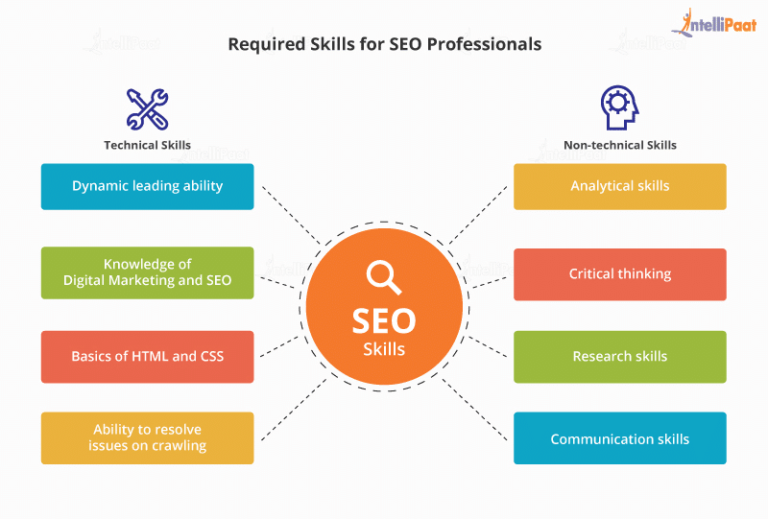
You need to be competent enough to deliver results. That means understanding technical SEO fundamentals, keyword research, on-page optimization, content strategy, and basic link building. You don’t need 10 years of experience, but you need enough skill to move the needle for clients. If you’re completely new, spend 3-6 months learning and practicing on your own site before taking on paying clients.
Should I quit my job to start an SEO agency?
Not immediately. Build your agency on the side until it’s consistently generating $3,000-$5,000/month, enough to cover your basic living expenses. The financial pressure of quitting too early leads to taking bad clients and making desperate decisions. Most successful agency founders ran both for 3-9 months before going full-time.
What’s the difference between freelancing and running an agency?
Freelancing is selling your time. An agency is building systems that deliver results through a team, allowing you to serve more clients without personally doing every task. The transition usually happens between 5-8 clients, when you physically can’t handle the workload alone. Freelancing caps your income at your available hours. An agency’s income is limited by your ability to build and manage systems.
Is SEO still worth it with AI taking over search?
More worth it than ever, but the skill set is evolving. Organic search still drives 53% of all website traffic (BrightEdge). AI Overviews and chatbots need sources to cite. Those sources are SEO-optimized web pages. The agencies that understand both traditional SEO and generative engine optimization (GEO) are positioned to charge premium rates because few practitioners have adapted yet.
How do I handle clients who want to cancel after 3 months?
First, set expectations during the sales process. SEO takes 4-6 months minimum to show meaningful results. Include this in your contract and onboarding materials. Second, show progress even before rankings move, completed audits, content published, technical fixes made, links built. If they still want to cancel, ask what specific outcome they expected and whether a scope adjustment would help. Sometimes the issue is communication, not results.
What if I can’t get results for a client?
It happens. Sometimes the niche is extremely competitive, the client’s website has fundamental issues they won’t fix, or the timeline was unrealistic. Be transparent early, don’t wait 6 months to admit things aren’t working. Propose a pivot (different keywords, different content strategy, technical priorities). If results truly aren’t possible given the budget and constraints, it’s better to end the engagement honestly than to string along a client who’s losing faith.
How much should I spend on marketing my own agency?
In the first year, your marketing budget should be 70% time and 30% money. Write blog content targeting your niche keywords. Be active on LinkedIn and in niche communities. Budget $200-$500/month for any paid channels (LinkedIn ads targeting business owners in your niche work well). The best marketing for an SEO agency is ranking your own website, it’s the ultimate proof of concept.